This post may contain affiliate links. If you make a purchase through these links, I earn a small commission at no extra cost to you.
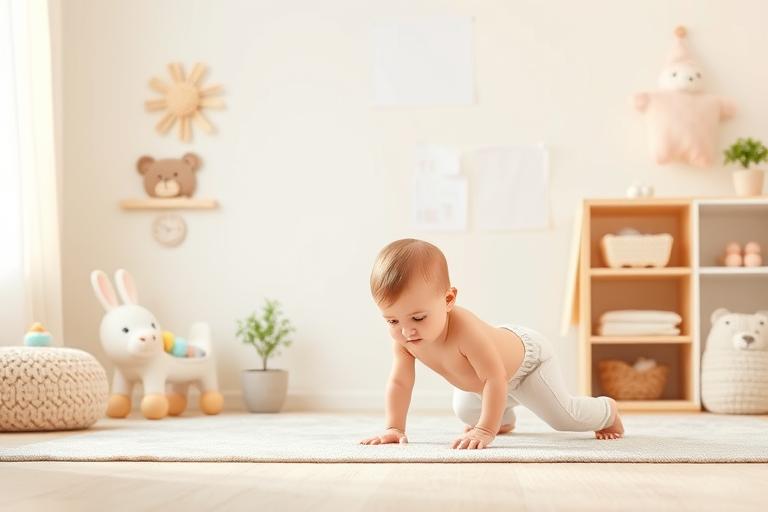
I still remember the day my daughter first crawled across our living room floor. I was simultaneously thrilled and terrified—thrilled because she’d reached this exciting milestone, and terrified because suddenly our home didn’t feel baby-proof anymore! If you’re wondering when babies start crawling and how to support this amazing development, you’re in the right place. I’ve been there, and I’m here to help you navigate this exciting phase with confidence and practical tips.
When Do Babies Typically Start Crawling?
Here’s what I wish someone had told me clearly from the start: there’s a pretty wide range of normal when it comes to crawling. Most babies begin crawling between 6 and 10 months old, but some babies skip crawling altogether and go straight to pulling up and walking. Both are completely normal!
Around 6 months, babies usually start sitting up with support and may begin rocking back and forth. By 7-8 months, many babies are getting into a crawling position and might be scooting backward or doing the “army crawl” (dragging themselves forward on their belly). Between 8-10 months is when you’ll likely see that classic hands-and-knees crawl, though some babies develop their own unique style—and that’s perfectly fine.
I’ve learned through my parenting journey and conversations with other moms that every baby is different. Your neighbor’s baby might crawl at 7 months while your little one doesn’t until 11 months, and both babies are developing beautifully. The key is to watch for the developmental progression rather than fixating on a specific age.
Signs Your Baby Is Ready to Crawl
Rather than obsessing over the calendar, I find it more helpful to watch for these signs that your baby is getting close to crawling:
Strong neck and back control: Your baby can hold their head steady and sit upright with minimal support. This foundational strength is essential for crawling.
Rolling over: If your baby is rolling from front to back and back to front, their core muscles are developing nicely. This is a great indicator that crawling isn’t far behind.
Rocking motion: You might notice your baby rocking back and forth while on their hands and knees. This is literally them practicing the motion they’ll need for crawling. It’s adorable and such an important developmental step!
Increased mobility: Maybe your baby is scooting on their bottom, army-crawling, or doing the “crab walk.” These are all valid forms of mobility and show that your baby is motivated to move around.
Reaching for objects: If your baby is stretching and reaching for toys that are just out of reach, that motivation to move is building. This is actually one of the biggest drivers of crawling development.
Weight shifting: You might see your baby shifting their weight from side to side while on their hands and knees. This is the practice they need to get those limbs coordinated for actual crawling.
How to Encourage Crawling Safely
Now for the practical part—how can you support your baby’s crawling development? Here are my tried-and-true strategies:
Create a Safe, Open Space
I can’t stress this enough: before your baby starts crawling, make sure you have a designated safe space. I use a large baby play mat or foam play area in our living room where my kids can explore freely without me constantly hovering. This gives them confidence to move, and it gives me peace of mind. Make sure the space is free of sharp corners, small objects, and hazards.
Use Tummy Time Strategically
I know tummy time can be controversial—some babies hate it, I get it. But even just 10-15 minutes a day (in short bursts) helps build the neck, shoulder, and core strength needed for crawling. I make it more enjoyable by getting down on the floor with my babies, making silly faces, and placing interesting toys just out of reach. The motivation to reach those toys is what drives development.
Place Toys Just Out of Reach
This is one of my favorite tricks. Instead of handing toys directly to your baby, place them a little distance away. This natural motivation to reach is one of the biggest drivers of crawling. Watch how your baby’s problem-solving kicks in as they figure out how to get to that toy!
Get Down on the Floor
Babies learn by watching and imitating. When I get down and crawl around with my babies, they become fascinated and want to copy me. It’s silly, it’s fun, and it works. Plus, you’re right there to supervise and encourage.
Use a Baby Walker or Crawling Toy Wisely
I’m careful about baby walkers (the wheeled kind) since they can actually delay crawling development and pose safety risks. However, push toys or crawling motivation toys can be helpful. Look for toys designed to encourage crawling, like ones that light up or make sounds when your baby moves toward them.
Celebrate Every Attempt
This might sound simple, but the encouragement and positive reinforcement matter so much. When my baby rocks back and forth, army-crawls, or makes any forward progress, I cheer enthusiastically. That positive feedback builds their confidence and motivation to keep trying.
Baby-Proofing Before the Crawl
Here’s something I learned the hard way: you need to baby-proof before your baby actually starts crawling, not after. Once they’re mobile, it’s much harder to manage. Here’s my essential baby-proofing checklist:
- Install safety gates at the top and bottom of stairs
- Secure furniture to walls (dressers and bookshelves can tip)
- Use outlet covers or safety plugs
- Remove small objects, choking hazards, and toxic plants
- Ensure cords from blinds and electronics are secured
- Use door locks on cabinets containing cleaning supplies or medications
- Keep the floor clear of small toys and objects
- Ensure your flooring is safe (avoid slippery surfaces)
I also installed baby gates in our hallways and used a combination of baby safety gates and cabinet locks to create a safe crawling zone. It’s not about being paranoid—it’s about being prepared so your baby can explore confidently.
When to Talk to Your Pediatrician
While there’s a wide range of normal for crawling, there are some signs that warrant a conversation with your pediatrician. If your baby isn’t showing any of the pre-crawling signs by 8-9 months, isn’t bearing weight on their legs, or seems to have significant strength imbalances, mention it at your next visit. Early intervention, if needed, can be incredibly helpful.
I always trust my gut as a mom. If something feels off or you have concerns, it’s better to ask your pediatrician than worry. That’s what they’re there for!
Key Takeaways
- Crawling typically begins between 6-10 months, but the range is wide and normal variations include scooting, army crawling, and skipping crawling altogether
- Watch for developmental signs like strong neck control, rolling, rocking motions, and reaching for objects rather than fixating on a specific age
- Encourage crawling through tummy time, placing toys just out of reach, getting down on the floor with your baby, and celebrating attempts
- Baby-proof your home before crawling begins by securing furniture, installing gates, removing hazards, and creating a safe exploration space
- Every baby develops at their own pace—comparison is the thief of joy, so focus on your own baby’s unique journey
Conclusion
The crawling phase is such a magical time in your baby’s development. It’s the beginning of their independence, and honestly, it’s both thrilling and a little bittersweet. One day your baby is stationary, and the next they’re zooming across the room exploring everything in sight.
Remember, there’s no “right” age for crawling, and there’s definitely no “right” way to crawl. Your job is simply to provide a safe environment, lots of encouragement, and the space for your baby to develop at their own pace. Trust your baby’s development, trust yourself as a parent, and enjoy these precious moments—they go by so fast.
I’d love to hear about your baby’s crawling journey! Drop a comment below and let me know when your little one started crawling and what milestones you’re most excited about. And if you found this helpful, please share it with other parents in your life. We’re all in this together!