This post may contain affiliate links. If you make a purchase through these links, I earn a small commission at no extra cost to you.
Oh mama, if you’ve ever found yourself googling “why hasn’t my baby pooped in three days?” at 2 AM, you’re not alone. Baby constipation is one of those topics nobody really talks about until you’re living it, and let me tell you—it’s stressful! I remember when my first son went through a constipation phase, I felt like I’d failed at motherhood somehow. Spoiler alert: I hadn’t. It’s actually super common, especially when babies transition to solids or formula changes.
The good news? A lot of baby constipation can be managed through diet. I’ve learned so much about which foods help and which ones can make things worse, and I’m excited to share everything I’ve discovered with you today.
Understanding Baby Constipation: When Should You Worry?
First, let’s talk about what “normal” actually looks like for babies, because honestly, the poop situation changes constantly. Newborns on breast milk might go several days without pooping and that’s totally fine. Formula-fed babies usually go more regularly. Once solids enter the picture? Everything changes.
I consider it constipation when my baby is straining, producing hard stools, or going longer than usual without pooping and seems uncomfortable. Some babies naturally poop less frequently once they start eating solids—that’s normal. But if your little one is clearly struggling or in pain, that’s when diet adjustments become your best friend.
Before making changes, I always check in with our pediatrician. They can rule out any underlying issues and give you personalized guidance based on your baby’s age and health. That said, dietary tweaks are usually the first line of defense, and they work beautifully.
Foods That Help: Your Constipation-Fighting Arsenal
These are the foods I reach for first when my kids are having digestive troubles. I’ve found that introducing them gradually and consistently makes a real difference.
Prunes and Prune Juice
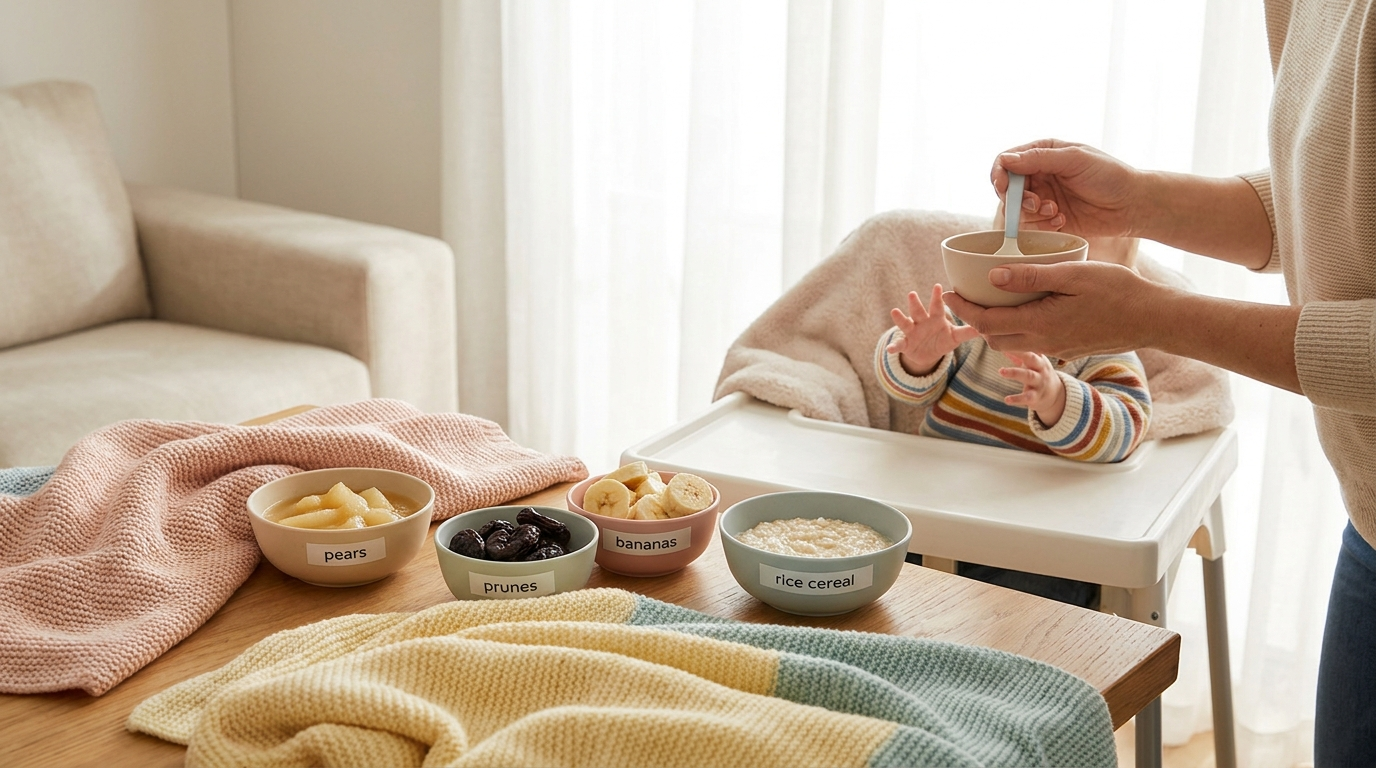
I know prunes have a reputation, but they’re literally nature’s laxative. They’re packed with sorbitol, which helps soften stools. For babies over 6 months, I’d offer a few prunes (pitted and mashed) or a small amount of prune juice mixed with water. Start with just an ounce or two to see how your baby responds. My son’s pediatrician recommended this as our first move, and it worked within 24 hours.
Pears and Pear Juice
Pears are gentler than prunes but still incredibly effective. They’re my go-to because they’re less likely to cause gas or cramping. I puree fresh pears or offer them mashed, and I’ve also used organic pear juice. The fiber content is amazing, and most babies love the taste.
Peaches and Apricots
These stone fruits are fiber powerhouses. Fresh, mashed peaches were a game-changer for us. Apricots (fresh or dried, though I puree dried ones) work similarly. They’re milder than prunes but still effective, and they taste delicious mixed into yogurt or oatmeal.
Whole Grains
Once your baby is eating solids, whole grain cereals and breads make a huge difference. I switched from white rice cereal to oatmeal and barley cereals, and the improvement was noticeable. The fiber helps everything move along smoothly. Look for baby cereals labeled “whole grain” or make your own by blending oats.
Vegetables (Especially Green Ones)
Broccoli, peas, spinach, and green beans are fiber-rich superstars. I started offering these once my baby could handle more textured foods. Sweet potato is also wonderful—it’s nutritious and helps with digestion. Introduce them gradually to avoid gas, but they’re truly beneficial.
Yogurt with Probiotics
For babies over 12 months, plain yogurt with live cultures can support healthy digestion. I look for unsweetened varieties and sometimes add a tiny bit of honey (only after 12 months!) or mashed fruit. The probiotics help balance gut bacteria, which can improve overall digestive health.
Water and Hydration
This might seem obvious, but dehydration is a major constipation culprit. Once your baby is eating solids, offering small sips of water throughout the day helps tremendously. I keep a sippy cup handy during meals and snack times.
Foods to Avoid or Limit: The Constipation Culprits
Just as important as knowing what helps is knowing what to avoid. These foods can make constipation worse, and I’ve learned this the hard way!
White Rice and Rice Cereal
I know rice cereal is often recommended as a first food, but it can be incredibly binding. White rice lacks the fiber that helps with digestion. Once my pediatrician suggested switching to oatmeal-based cereals, things improved dramatically. If you’re using rice cereal, mix it with prune juice or pair it with fruits to help.
Bananas
This one surprised me! While bananas are nutritious, they’re actually constipating for many babies. I’m not saying never offer them, but if your baby is struggling, reduce banana intake or skip it temporarily. This was the culprit for my youngest, and removing it solved the problem.
Cheese and Dairy
Too much cheese and cow’s milk products can be binding. I still offer these foods because they’re nutritious, but I balance them with high-fiber options. If your baby is constipated, go easy on the cheese for a while.
Processed Foods and Low-Fiber Options
Crackers, white bread, and processed baby foods often lack fiber. I try to offer whole grain alternatives and make my own baby food when possible. It gives me control over the ingredients and nutrition.
Too Much of Anything
Even good foods can cause problems if overdone. I learned that offering the same foods repeatedly can sometimes cause issues. Variety is key—rotate your fruits, vegetables, and grains to keep things interesting and balanced.
Practical Tips for Implementation
Knowing what to feed your baby is one thing; actually getting them to eat it is another! Here are my real-world strategies.
Start Small and Go Slow
I introduce new foods gradually, especially the constipation-fighting ones. Too much fiber too quickly can cause gas and discomfort. I usually add one new food every few days and watch for reactions.
Mix It Up
My kids are more likely to eat something new if it’s mixed with a familiar favorite. I blend prunes into oatmeal, mix pears into yogurt, and combine vegetables with mild foods they already enjoy. You can use a Baby Food Blender or Processor to make a meal they will enjoy.
Make Your Own Baby Food
When you control the ingredients, you can ensure proper fiber intake. I steam fruits and vegetables, then puree them in batches. It’s actually easier than I expected, and my babies seem to prefer homemade food. Baby Food Storage Containers help store the food in baby portions for continous feeds.
Stay Consistent
Dietary changes take time. I usually give it at least a few days before deciding whether something is working. Patience is key—sometimes it takes a week to see real improvement.
Encourage Movement
Physical activity helps digestion. I make sure my babies get plenty of tummy time, crawling, or walking (depending on age). Sometimes a little movement combined with dietary changes works magic.
When to Call Your Pediatrician
Most baby constipation is manageable at home with dietary changes. However, I always call my pediatrician if:
- My baby hasn’t pooped in more than a few days and seems uncomfortable
- There’s blood in the stool
- My baby has abdominal pain or bloating that doesn’t improve
- Dietary changes don’t help after a week or two
- My baby seems ill or has other symptoms
Your pediatrician might recommend a stool softener or other interventions if diet alone isn’t working. There’s no shame in that—sometimes babies need a little extra help. [PRODUCT: Pediatrician-Recommended Stool Softener]
Key Takeaways
- Fiber-rich foods are your best friend: Prunes, pears, peaches, whole grains, and vegetables work wonders for baby constipation.
- Know the culprits: White rice, bananas, and excessive dairy can make constipation worse—adjust accordingly.
- Hydration matters: Offer water once your baby is eating solids to support digestive health.
- Go slow with changes: Introduce new foods gradually to avoid gas and discomfort.
- Consistency is key: Give dietary changes time to work—usually a few days to a week.
- Trust your instincts: If something isn’t working, contact your pediatrician for personalized guidance.
Final Thoughts
Baby constipation is one of those parenting challenges that feels bigger than it is. I promise you, mama—you’re doing great, and this phase will pass. Most of the time, simple dietary adjustments make all the difference. Start with the foods that help, avoid the ones that hurt, and give your little one’s digestive system time to adjust.
Remember, every baby is different. What worked for my kids might need tweaking for yours, and that’s totally okay. Pay attention to your baby’s individual responses, keep your pediatrician in the loop, and trust that you’ve got this.
Have you dealt with baby constipation? I’d love to hear what worked for your family! Drop a comment below—we’re all in this together, and sharing what works helps everyone. And if you found this helpful, share it with a friend who might be googling “baby constipation” at 2 AM. You’ll be her hero! 💕